

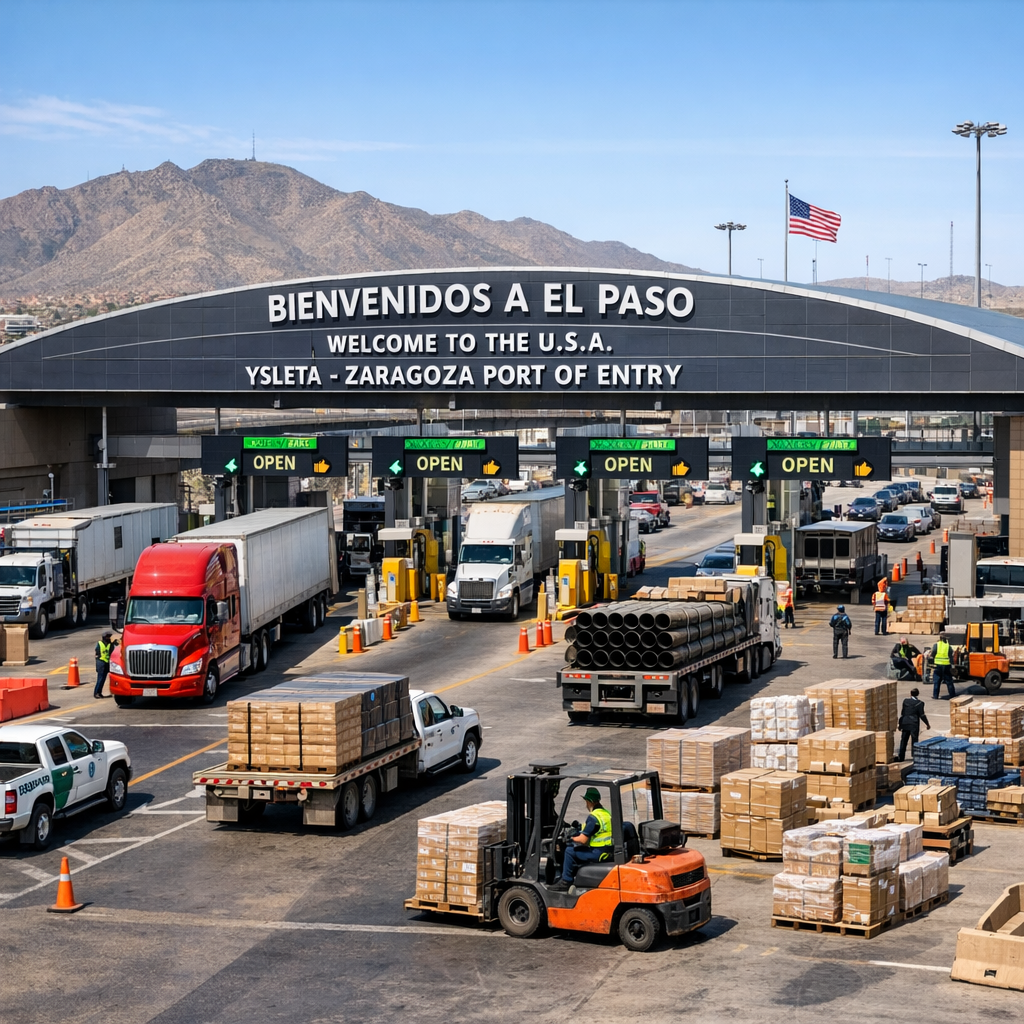
In recent years, El Paso has solidified its position as a critical player in global trade, particularly in the context of nearshoring—the practice of relocating manufacturing operations closer to the consumer market. This trend has been accelerated by the United States-Mexico-Canada Agreement (USMCA) and disruptions in global supply chains, prompting companies to reconsider their manufacturing strategies.
El Paso’s strategic location along the U.S.-Mexico border makes it an ideal gateway for cross-border commerce. The city’s robust infrastructure, including modernized ports of entry and efficient logistics networks, facilitates seamless trade between the two nations. This has attracted numerous manufacturers seeking to capitalize on the benefits of nearshoring, thereby boosting the local economy and creating job opportunities.
To further strengthen its international ties and economic prospects, El Paso adopted its first-ever International Policy Agenda in April 2025. This comprehensive framework aims to enhance binational collaboration, attract foreign direct investment, and modernize critical city-owned infrastructure, such as international bridges and trade corridors. The agenda underscores El Paso’s commitment to leading on issues that transcend borders, including economic growth, infrastructure development, public health, and climate resilience.
In line with these efforts, the city has hosted significant events like the Manufacturing & Supply Chain Nearshoring Summit. This gathering brings together industry leaders, suppliers, and government officials to discuss nearshoring strategies and explore investment opportunities. Such events not only position El Paso as a hub for manufacturing and logistics but also foster meaningful connections that drive regional economic development.
As global trade dynamics continue to evolve, El Paso’s proactive approach to embracing nearshoring trends and enhancing international partnerships ensures its continued prominence on the global stage. The city’s strategic initiatives and commitment to cross-border collaboration exemplify its role as a vital conduit in the ever-changing landscape of global commerce.